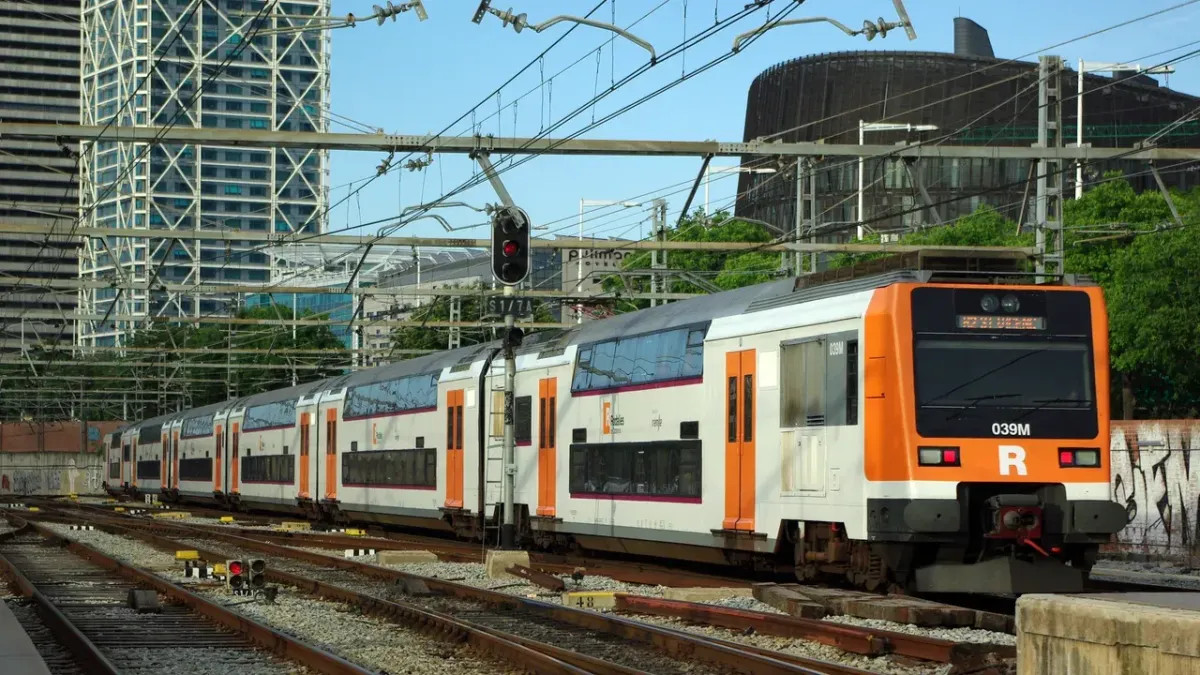
Commuters across Catalonia faced a morning of significant disruption on Sunday, 15 November, as the Rodalies network was hit by a combination of infrastructure crime and operational failures. By 09:00, more than half of the trains in circulation were running behind schedule, with 39 out of 66 services recorded as delayed.
The most severe impact was felt on the R1 line, where passengers endured waits of up to 60 minutes. These delays were primarily triggered by the theft of copper cabling between Badalona and La Sagrera, an act of sabotage that initially slowed traffic by roughly half an hour before knock-on effects worsened. Elsewhere on the network, the R4 line saw delays of 56 minutes, while the R2 Sur reached 49 minutes. Services on the R11 line were also affected, with fluctuations between 15 and 30 minutes.
Infrastructure damage and road replacements
Beyond the copper theft, an additional operational incident on the section between Maçanet-Massanes and Mataró forced a partial suspension of rail services. To mitigate the impact on travellers, Renfe established a replacement road transport operation. Buses were deployed to ferry passengers between Maçanet-Massanes and Blanes, as well as on the route connecting Blanes and Mataró.
New labour agreement in effect
The Sunday disruptions occurred shortly after Renfe reached a new labour agreement with the Semaf union. This deal restores a previous scheme governing shifts, schedules, and service start stations. Crucially, the agreement allows train drivers to avoid travelling to Sants to begin their shifts, returning to a decentralised system for starting work. While the new staffing arrangements are now in place, the network remains vulnerable to the external pressures of infrastructure theft and technical faults.